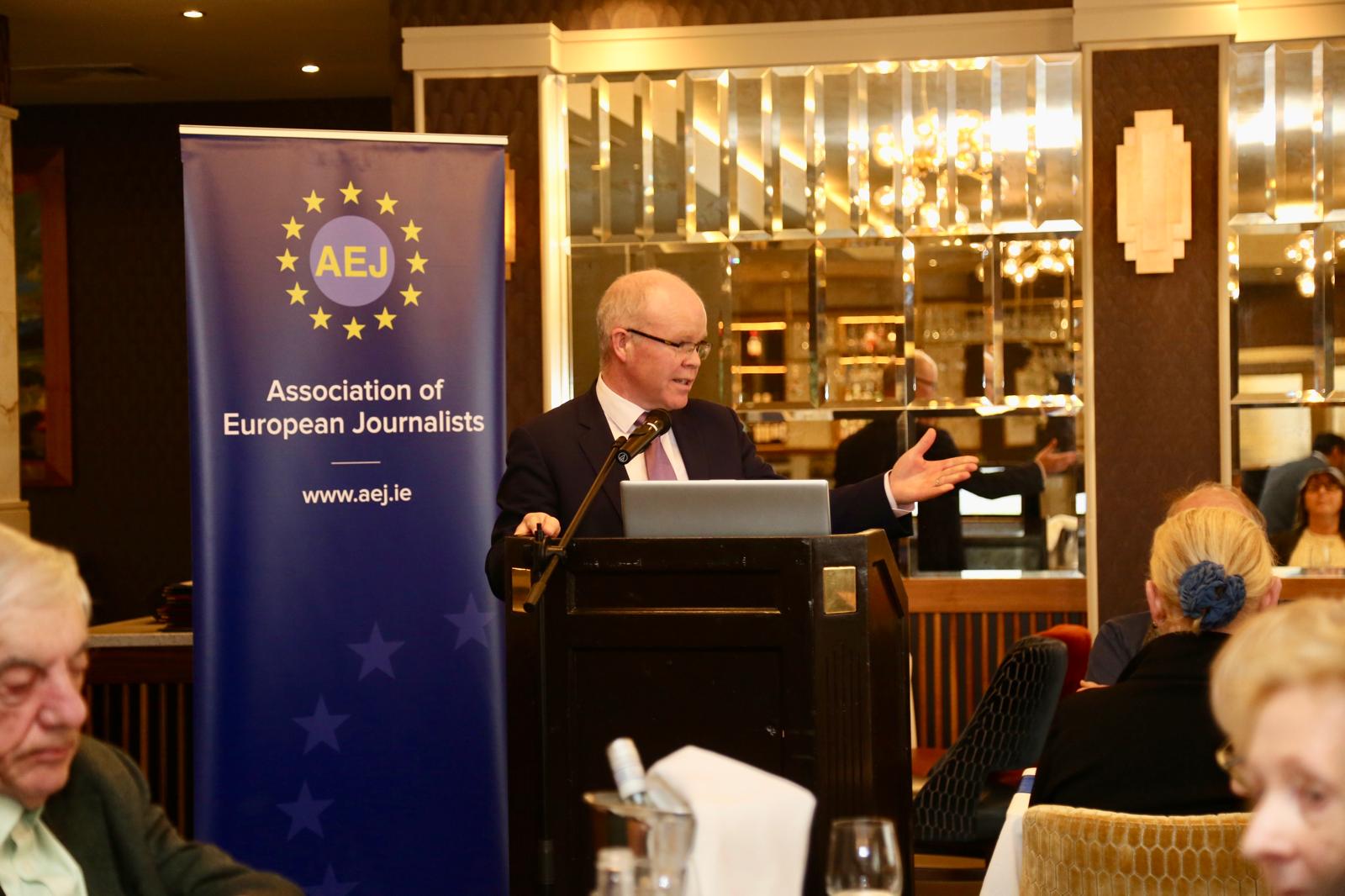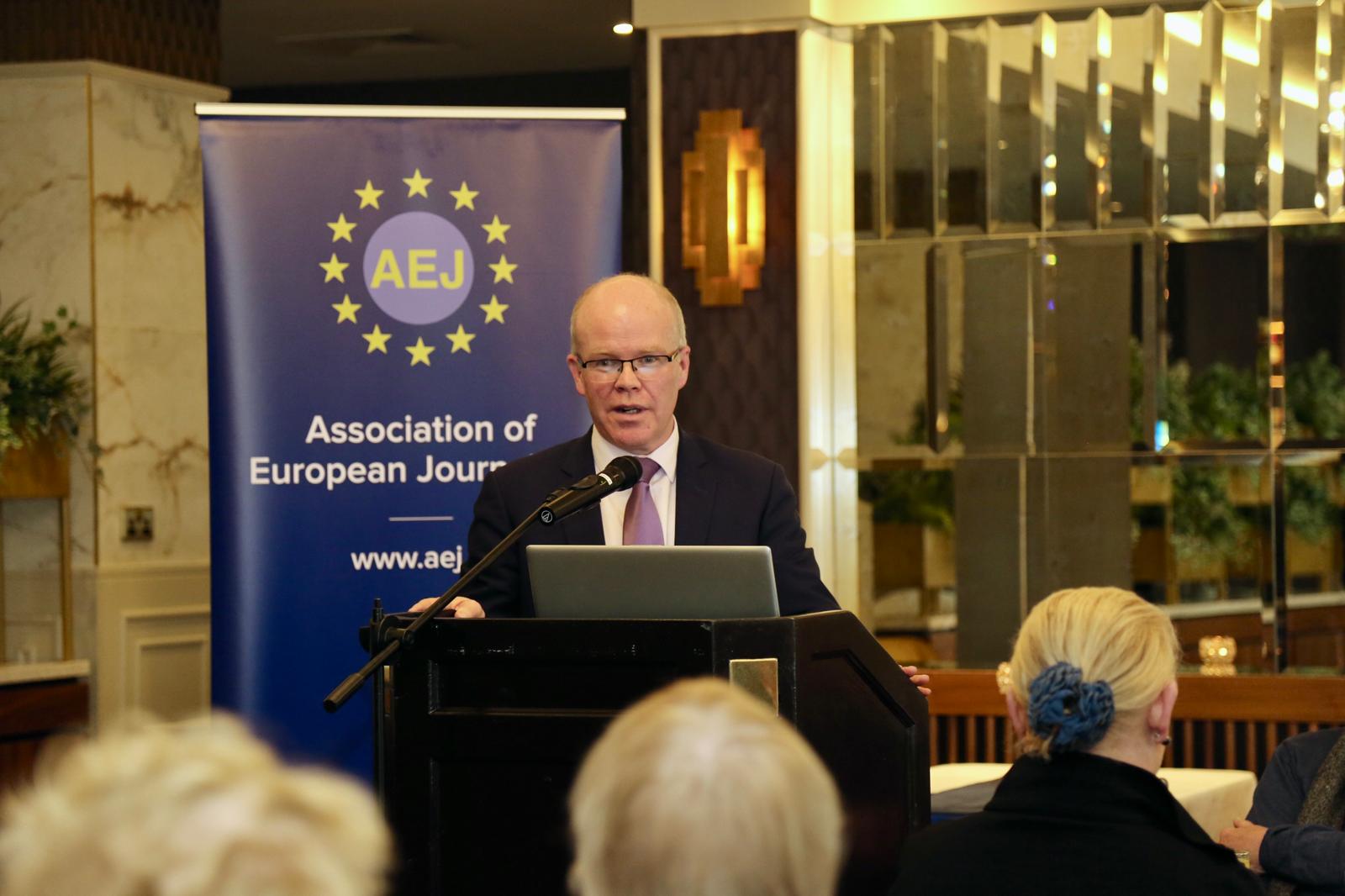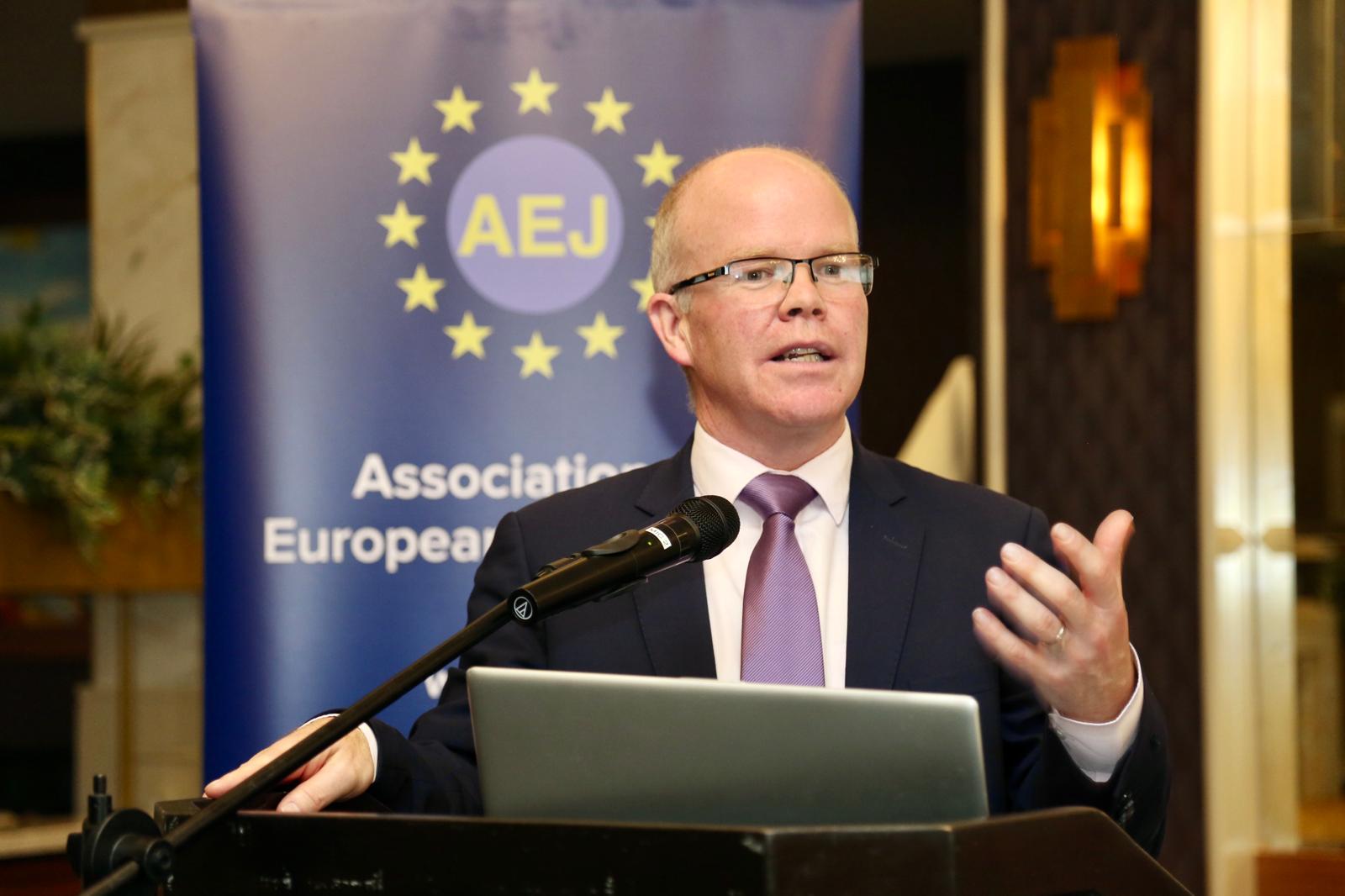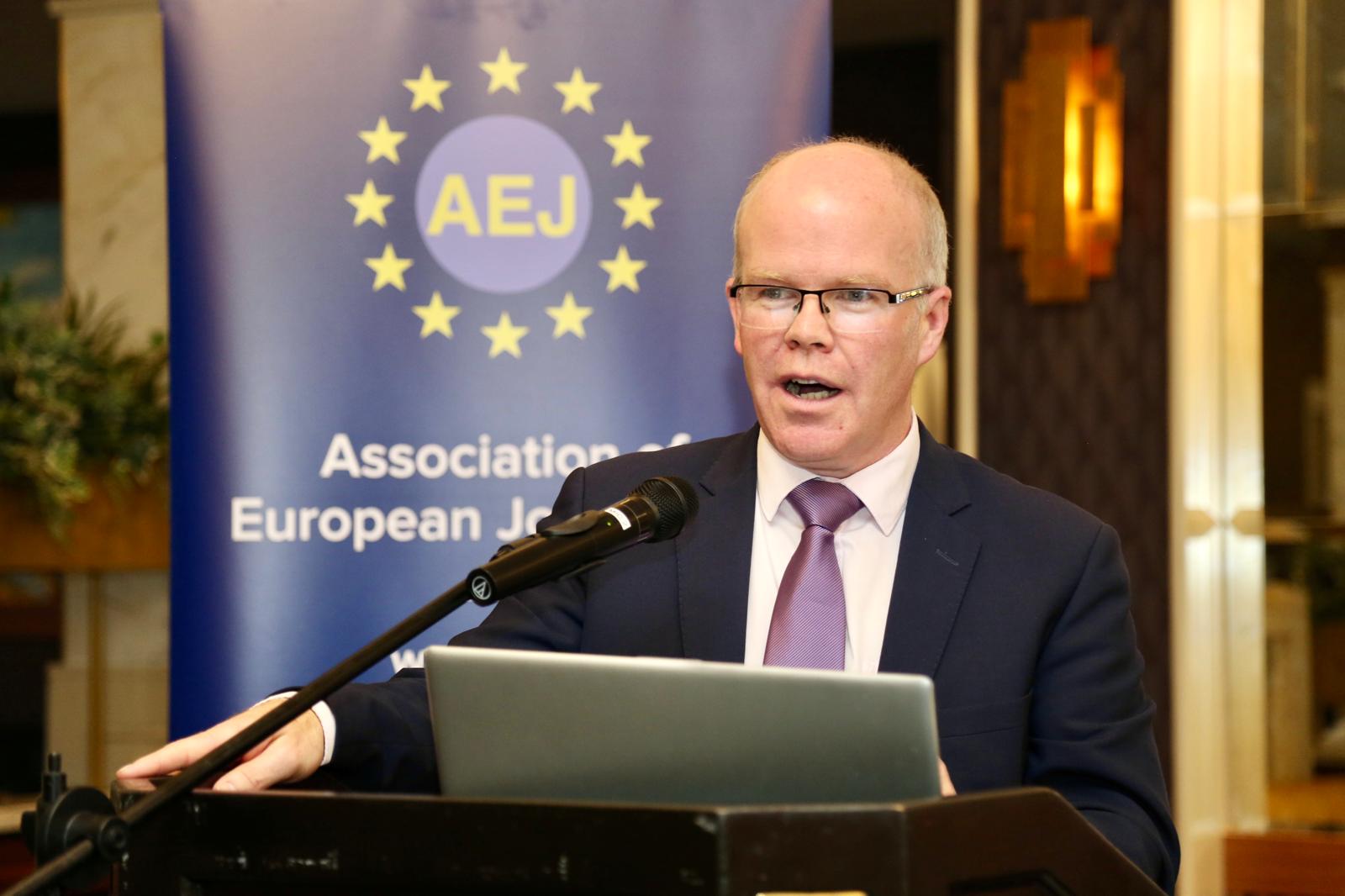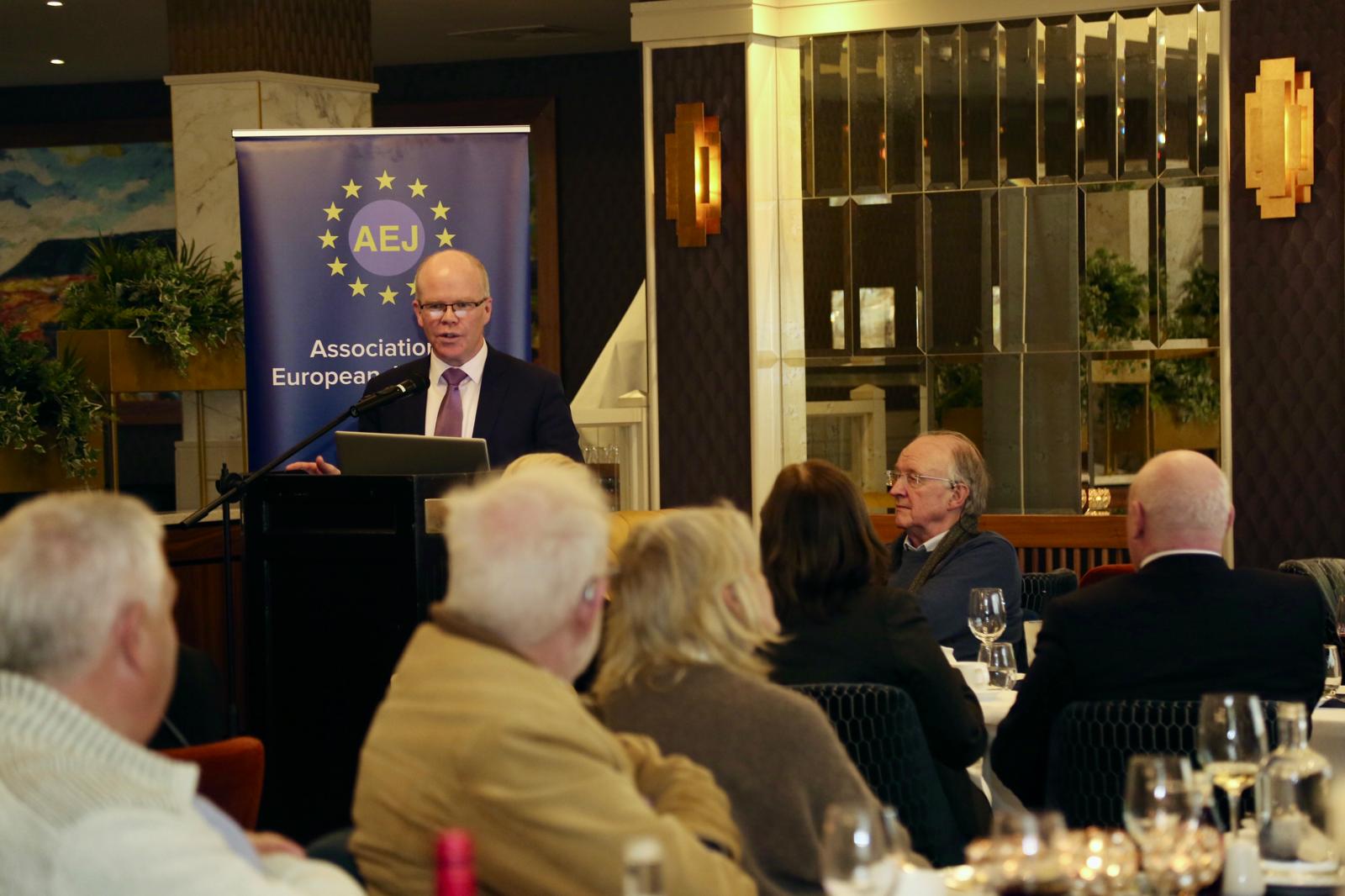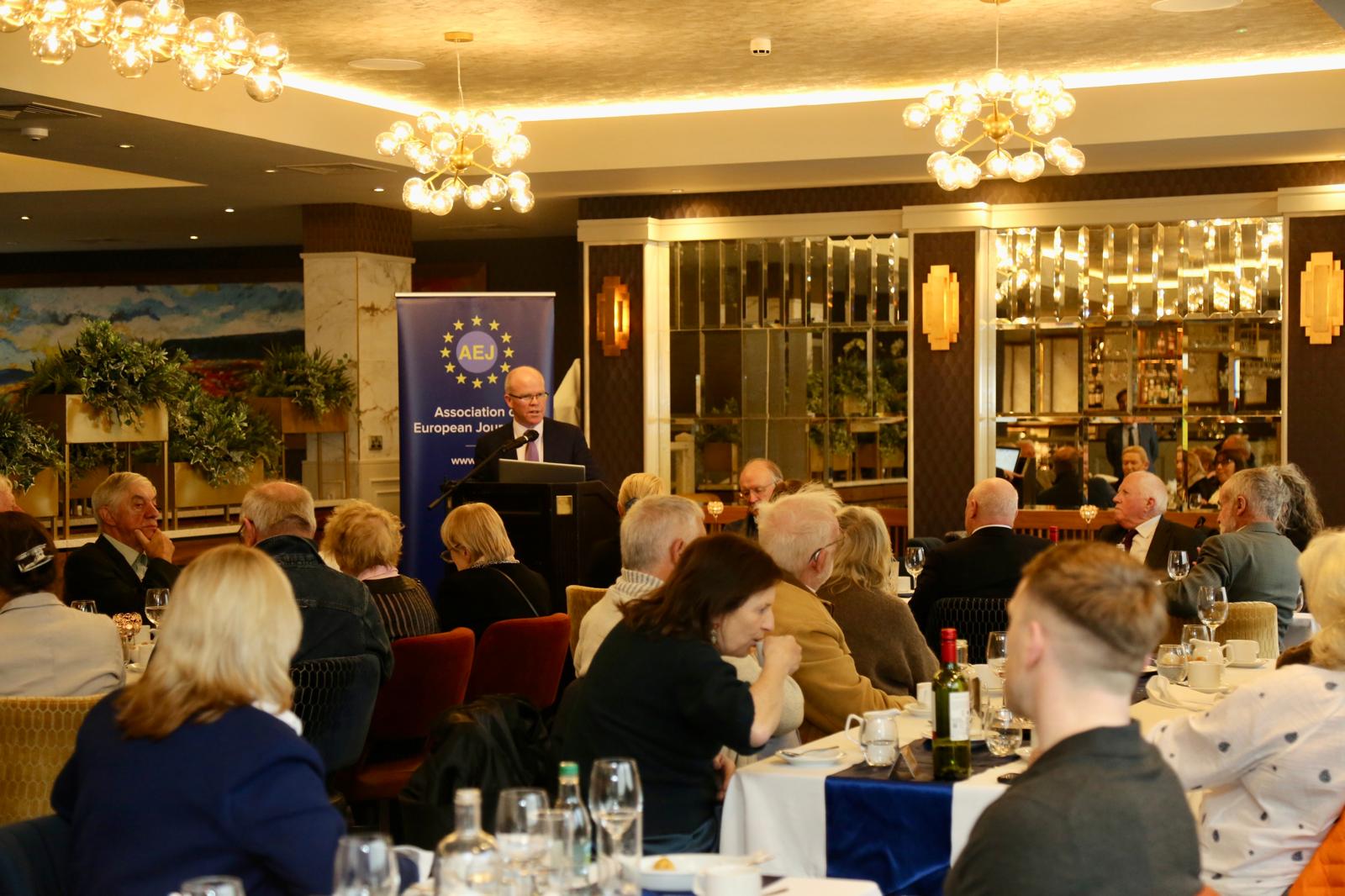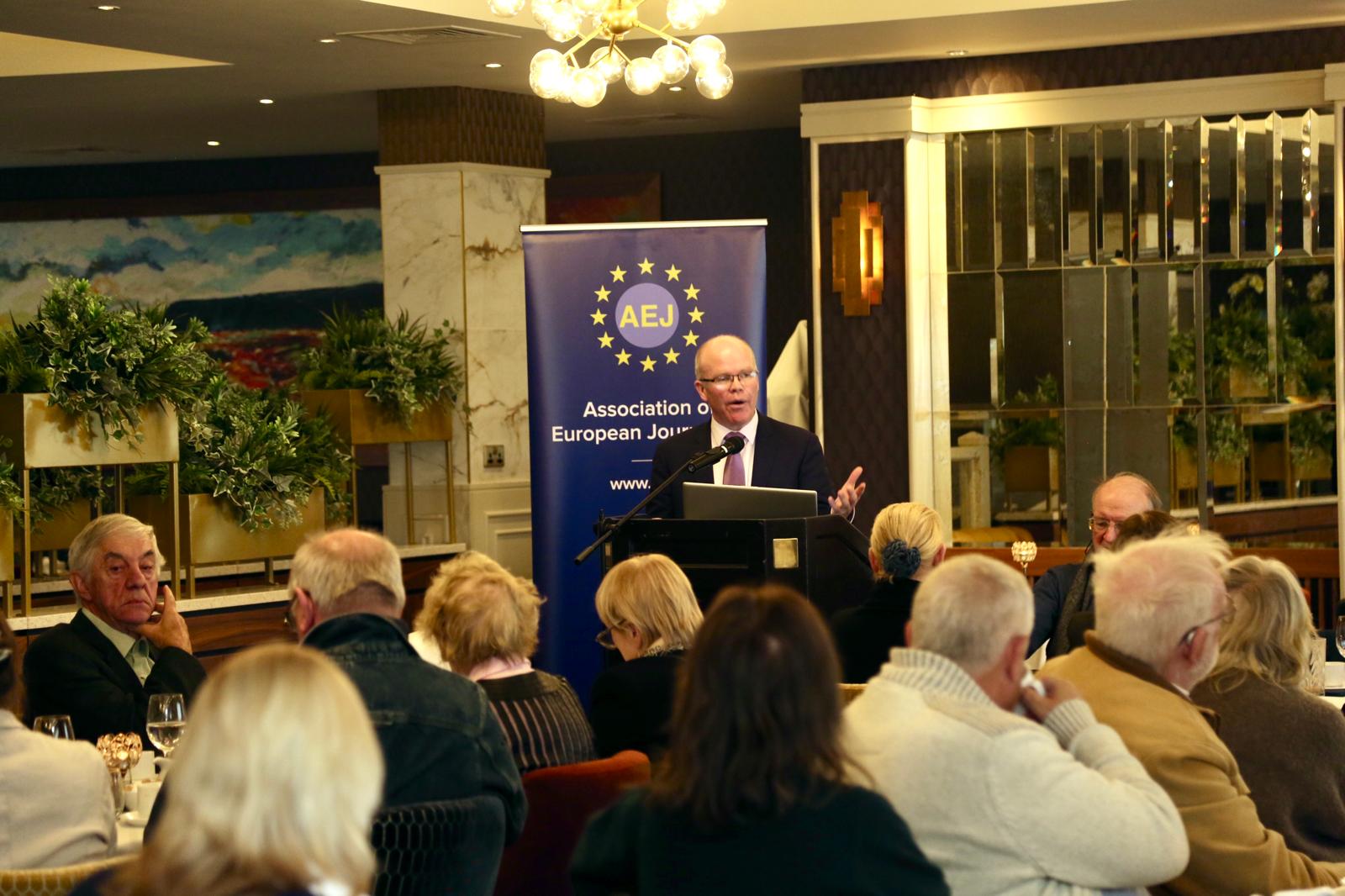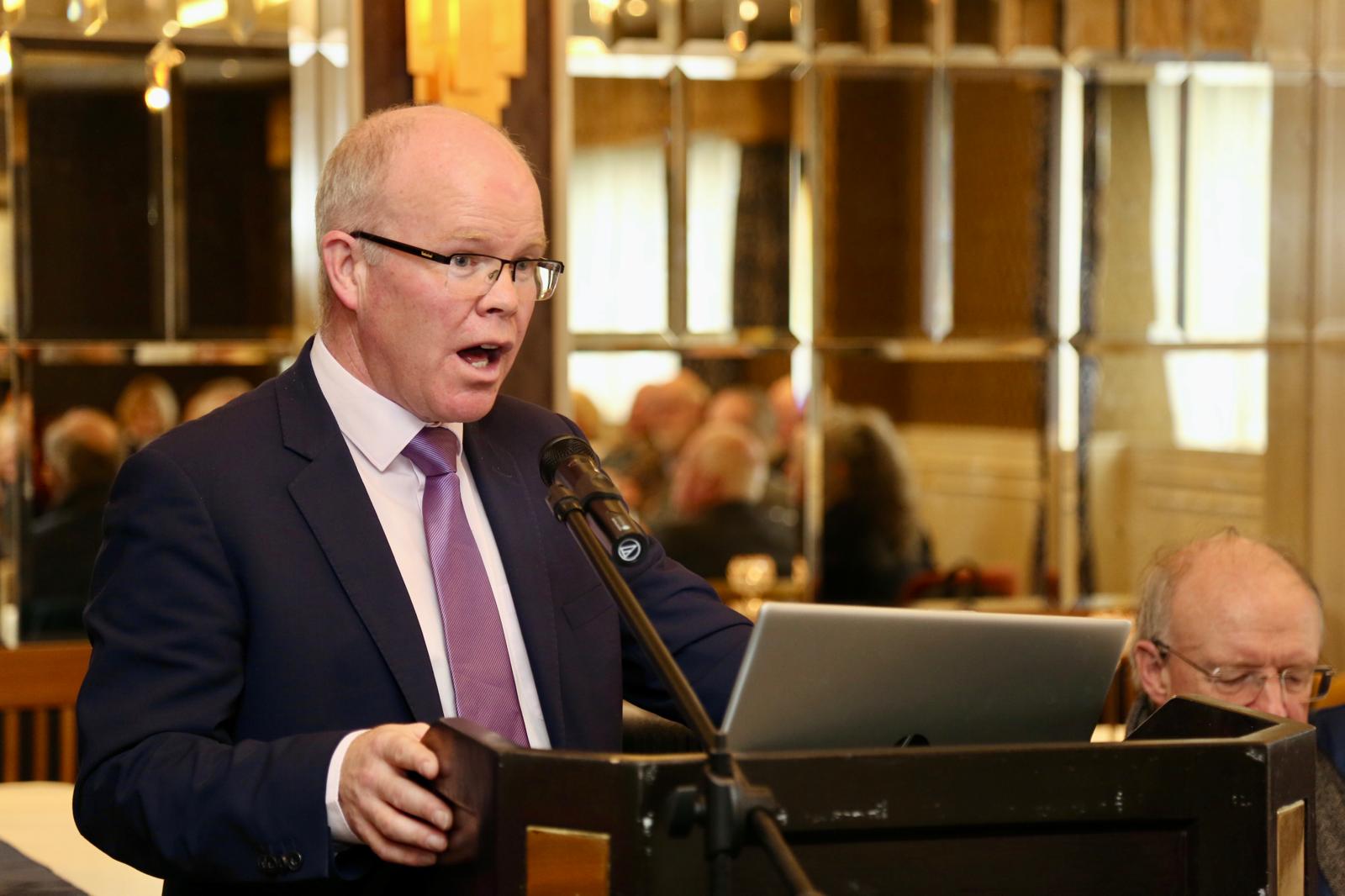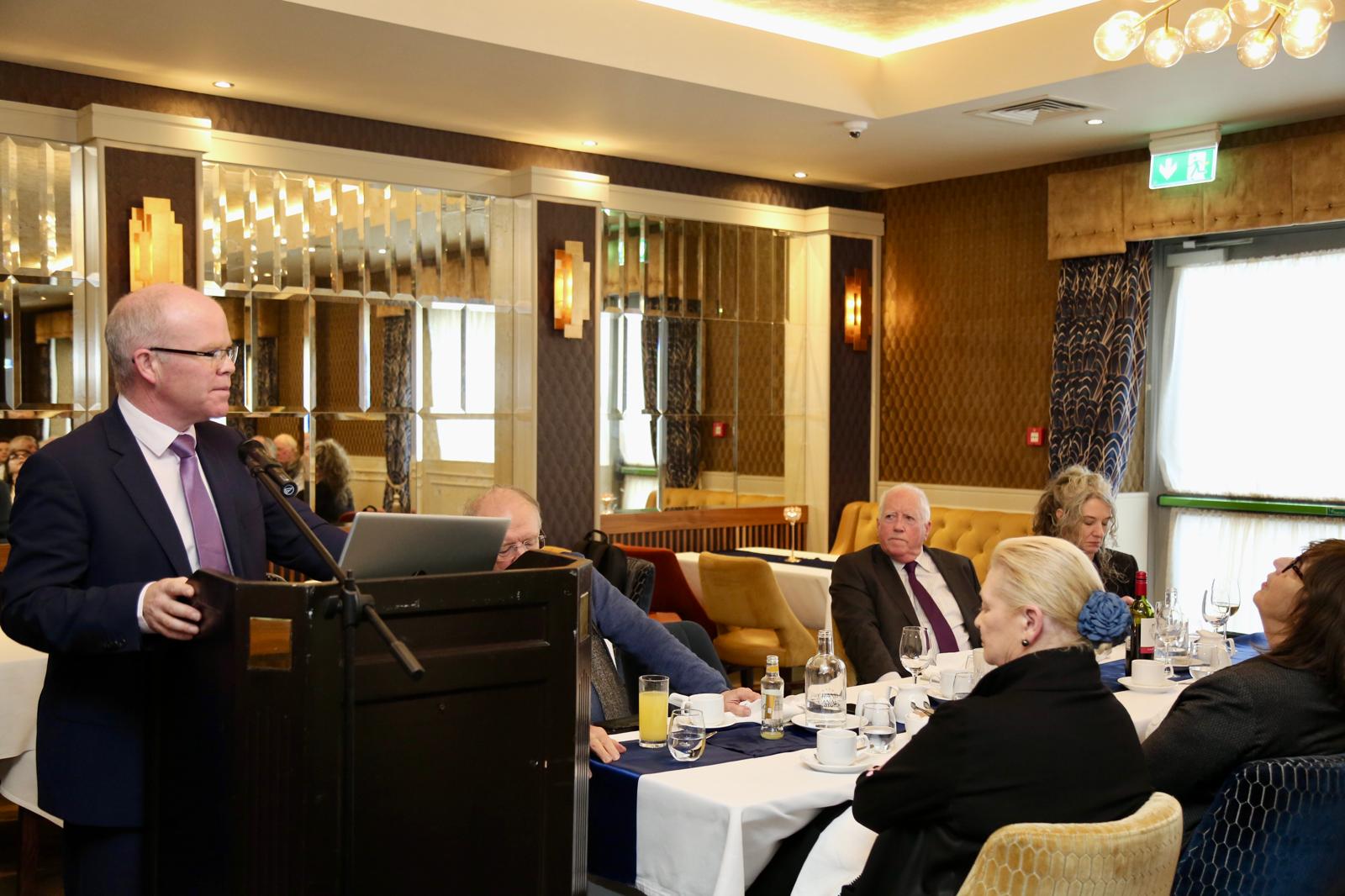
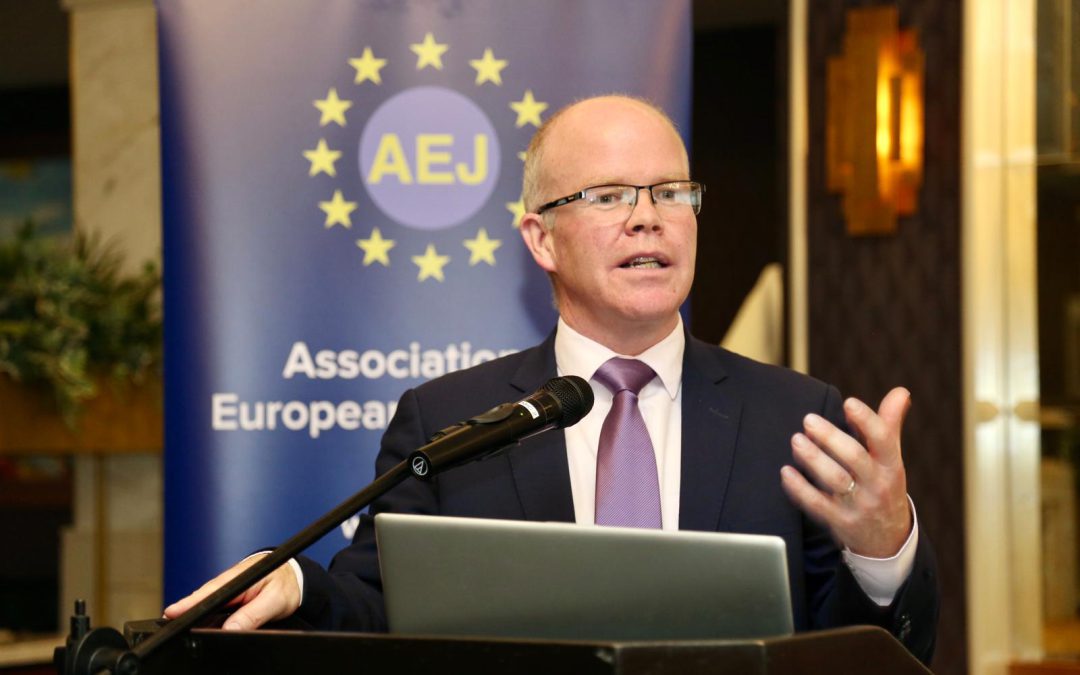
Address by Peadar Tóibín at the AEJ lunch, Thursday, 5th November, 2026, at the Grand Canal Hotel, Dublin.
Politicians have a love/hate relationship with the press.
I’m reminded of the Simpsons’ episode where Lisa Simpson conducts a science experiment: Is my brother dumber than a hamster?
She uses cupcakes connected to an electrical current to see how they learn. The hamster gets it straight away. Bart, when he touches the cupcake, gets a shock. But he keeps going back to it over and over again.
Politicians are like that with journalists.
We need you to help us in our work. And sometimes we get a shock. And that’s important because we need that level of challenge. This is one of the things that interests me about politics. I’m interested in the idea of systems. I studied politics and economics in college.
I was very lucky at the time, with politics, I had people like Brian Farrell and Richard Sinnott, many of you will know those individuals. They were fascinating people. They’d stand up in front of a lecture hall, take off their tie and spend an hour telling us stories about what happened when they interviewed Eamon De Valera and all this type of stuff.
So it was really fascinating. One of the interesting questions in politics is: why are we in the situation we’re in at the moment.
What are the ingredients that have led to the political system we are in at the moment. I don’t know if anyone reads Foucault, but there’s a very interesting book called The Archaeology of Knowledge. It’s fascinating how we can change our values so fast on a range of issues in one generation. What the ingredients are, to make those changes happen.
We’re at an inflection point, politically, at the moment.
I think 2008 was the biggest political and economic shock I have lived in. In economic terms, hundreds of thousands of people were dispossessed. They were dispossessed of their jobs, their homes, often their children, who had to go and emigrate.
That economic shock had the effect of also changing politics significantly as well. We saw the collapse of Fianna Fail and Fine Gael over that period of time,
They shed hundreds of thousands of votes over that period. One of the big movements at that time was the Right to Water campaign. I was a member of that campaign. I was the chair of Meath Right to Water. But that campaign led to significant leftward shift, economically and politically, not just the growth of Sinn Fein, but also parties like Fianna Fail and Fine Gael, but also significantly shifted to the left on economic policies and social policies as well, which I think is very interesting.
I think that actually set up the system where we saw the referendums of the following decade. That those referendums passed is significant, in that they happened in the context of that political realignment ten years previously.
That was a big shock, and of course we saw Fianna Fail and Fine Gael share power in that same period of time. The next shock to the system was Covid, which came in like a whirlwind and most governments around the world instinctively felt the need to protect their societies, to protect the vulnerable and the old, and most shut down their systems.
But Covid had a cost too. We saw situations where schools were closed for an extremely long period and children lost out on a lot of socialisation.
Children with disabilities lost an incredible level of support, many unfortunately reversed in progress they had made. Women who had suffered domestic abuse and even children who had suffered domestic abuse were often imprisoned in abusive homes. Civil liberties that we take for granted were put under question. Covid started a situation where people began to disrupt the political system a little bit. They started to distrust the media too. One of the aspects around Covid was there was a uniformity around it. The 1950s in Ireland was an extremely uniform time too. There was very little dissent and those who dissented often got a belt of the crozier, and media and politicians did as well. Around Covid, we saw a bit of that uniformity of ideas. If people questioned the status quo, they would come under fierce pressure.
People were afraid to speak out against what was happening with those lockdowns. Other issues started to happen as well. And under that uniform political system, Fine Gael were probably in power for those 15 years. So we had a centrist government only being attacked by left wing liberal opposition. That was a very one-dimensional political system. It was important because the opposition did good work in those days. But really for a functioning democracy, you need more than one dimension of debate. Actually one of the founding principles of our party is the competition of ideas. This is the engine of a functioning democracy – when ideas compete with each other, the best ones tend to percolate to the top and that’s how progress is achieved.
You have a society whereby people don’t feel confident to speak out on certain issues and to challenge certain homogenous views or certain taboos. That’s a bad thing for democracy and how it functions. Into this, we have things like gender ideology, hate speech and the restriction of freedom of speech, and then immigration came along as well. All these aspects sliced off a small section of society who no longer felt that their voices were heard, or they didn’t have a space in media or politics.That’s a mistake. We need to have a political system strong enough to withstand and facilitate dissent of views, and views we may not agree with. Journalism is obviously an important engine of such a society, Journalism is one of the major locations where ideas are able to be heard and to swim. I think we are in difficulty in Ireland at the moment, in that we have a shrinking media, which is a big threat to a functioning democracy here. Ireland only really has about a thousand national journalists, I would say, and most are employed by a handful of five or six media organisations. The largest of course is RTE. I do think if we want this working democracy, we need to see far more diversity of media in RTE and in Ireland. I think there’s a danger in the future that if we don’t have that diversity of thought in the media space as well as the political space. In recent months though, there has been a significant change in this.
People often ask me: What do I think happened?
I think change happened around those dual referendums in 2024. Up until then, Government virtue signalling would achieve success for them. They would bask in the glow, have a wonderful referendum and be seen to be part of the progressive process. I think that’s even why the referendum was held in the first place. It was just in advance of European and local elections. But at that stage the people really started to tire of the approach and got fed up, and pushed back. Aontú were the only party to campaign for a No vote in those referendums – referendums which were of course roundly rejected by the electorate.That was the first pushback.
The second push back was the issue of the presidential election recently. As a party, we did our damndest to see could we get more choice on the ballot paper. We knew from the people we were talking to that a large section of society simply felt they had nobody to vote for on that presidential ballot. It was the biggest spoiled vote in the history of the state, and of any European election. It passed by with very little comment. But another big pushback were the recent fuel protests. You need to listen to the people on these issues. When I go to the petrol pump today, if I spend €100 putting fuel in the tank, €45 of that goes in government taxes. It’s incredible. It’s not a luxury good. It is needed by people in their everyday lives. The idea the state has gone into a situation of taking 65% of tax on a staple good, it’s quite strange that would have been allowed to happen.
Ireland has the highest electricity prices in the world. We are outliers on these things, It’s bad for enterprise, it’s bad for business. It’s bad for individuals. We are an environmentalist political party. We know there is global warming, We want to be able to shift people from carbon fuels into more sustainable alternatives. But if you can only do it with a massive stick and no carrots, you are going to push people’s backs against the wall and they will become frustrated with the system.
If we learn anything from Trump’s collapse in the election just a few days ago: It’s the economy, stupid. It’s the idea of people being able to live and pay their way. If people suffer inflation to such a level that they are not able to exist, they will push back hard against the political system as well. There’s a significant change at the moment, Fianna Fail and Fine Gael are down to 30% combined, which is stunning. We would never have thought those two parties could be so low .
Aontú is currently at 9% but we will go higher, I hope. The fact is about 16% of the electorate is between Aontú and Independent Ireland. That didn’t exist 10 years ago. It’s the newest addition to a new political landscape. It is having a significant impact. Both Sinn Fein and the government have all shuffled now, back to the centre, on a range of different issues.
In economic terms, how does that political dynamic affect Ireland? One of the things is accountability. The left typically don’t fight the issue of accountability. In financial terms, for example, by asking if the civil service is doing the right thing,
Are they efficient? Are they functioning? We have made it a big issue. Out attitude is that if you’re a senior civil servant, it should be written into contracts that if you waste money and if you splurge to such a level that it costs the taxpayer chunks of money, there should be a penalty, there should be consequences up to and including losing your job. People say: how will anyone make a decision if you do that? Well, look at the private sector. That’s exactly the dynamic that exists in the private sector. In every decision they make, there’s a cost to wrongdoing in a job, and they are well able to make decisions. Civil servants should have a performance element to their pay and contracts. Senior civil servants should have it written into their contracts: there is a cost to them for not doing their job properly.
We also suffer from a lack of regulation. Back in the Celtic Tiger days, we had blocks of apartments going up without proper fire measures in Dublin. We had houses built with mica and pyrites across the country.
But then the pendulum swung too far and now we have the slowest planning, tendering, procurement, licensing and judicial review system in the whole of Europe. Now it takes twice the length of time to build a home than it did 10 or 15 years ago. So the pendulum swing has affected us in economic terms, as well. Even under the current pay negotiations, I think there should be a new approach with the trade unions. Now I do believe the workers are entitled to a cost of living increase. We believe there should be a spark in the economy. If there’s no spark, there’s no benefit in working hard and getting up early in the morning, as Fine Gael like to say. If there’s no benefit in taking risks or spending time in education, then there’s no energy in the economy. There’s no surplus to be able to develop the public services that you need. That needs to be there at all times but there also needs to be a safety net underneath people in their time of need.
So people can do a decent day’s work, deserve a decent wage, and be able to cover the staples of life. For public services and housing, if people are in trouble, we need to help. But if people are abusing those public services too, we need to be strong in that manner too.
We need to be able to treat different professions differently on pay. We are really in trouble for the lack of nurses. In 2024, Australia employed more gardai than we did.
There are certain sectors that are in international recruitment markets and we have to pay them, to be able to compete in those markets. If we give everybody the same increase, that’s going to hurt us bad. So we have a different approach than a lot of political parties in these issues.
Journalists often struggle to position us on the political spectrum. We would see ourselves as a republican, pluralist, political party. We believe everybody, no matter who they are, should have the right to live their full lives without fear or favour, recognising we are a pluralist country, made up of different types of people, who all have equal rights to be part of this country.
We are a party who believes the colour of a person’s skin is of no more significance than the colour of their eyes. Everyone who is here, legally etc, should be able to live well and work well and thrive.
We are not talking about ideological straitjackets that existed years ago. Sometimes when you’re in college and you’re looking for your political tribe, it’s like going to a shop and on the top shelf there’s a box that says “right-wing politics” and on top of that, another box that says “left wing politics”.
We look at the right wing box and we see: smaller government, big police force, lots of prisons, low immigration, supporting Israel. The left wing box says: pro-Palestinians, workers rights etc. We need to interrogate every single thing in each box individually, not with ideology, but on the basis of evidence. If we use ideology only to filter where we stand on things, we’re in big trouble, because we’re not science-based, we’re not evidence-based. Aontú has issues that would be left of centre, on workers’ rights and public services. We would probably be right of centre on a number of political views, maybe more conservative than other political parties. Our attitude combines two things: make sure you’re common sense, but if you’re going to communicate on any issue, you need compassion as well. If you do not accept and understand people’s difficulties without compassion, you’re in big trouble.
We are an all-Ireland party. That pluralism comes in there, that Wolfe Tone instinct of Catholic, Protestant and Dissenter. Being able to live in the one country together, in peace and harmony. But we also believe in self-determination and sovereignty. Sometimes that can be a dirty word in political circles. When making decisions, the closer they are to the people they affect, the better the decisions. One of the factors that drove up the European interest rate in 2008 was how it was designed for a German economy that was in a different cycle than the Irish economy. A very high interest rate was needed to cool down that bubble. But because it was a uniform tool at that time, that was not allowed to happen. Having uniform tools across the European Union is not necessarily a good idea. We believe in ore devolution from Brussels on a range of issues.
Big issues like climate, we need international co-operation. Other issues are best suited for the country itself, which brings up the issue of neutrality. We are strongly in favour of neutrality. Military blocks tend to act in their own economic interests. Small countries who provide personnel for war tend to have low influence, for example, Denmark lost the same number of troops per capita as the US did in both Iraq and Afghanistan.The argument is made: Russia and China are preventing Ireland from making decisions. But if countries are at odds on the Security Council, siding with either is by definition part of a military block.
My worry is Europe is heading towards a new militarism and a stronger desire to have military impact in the world. I don’t think that Ireland should be part of an EU defence union. We have an international reputation as an honest broker, we should be using that to try and develop peace. I’m not saying it’s going to be easy, or likely. But I think there’s always an onus on us to challenge towards peace.
We are a people power membership. This is an important difference. One of the reasons why I feel Fianna Fail and Fine Gael are suffering at the moment is they have lost their knowledge of the grassroots because their membership and Cumann structure is corroding at a fierce rate.
These plug parties into what’s happening on the ground. Half the work I did in the first five years of the development of Aontú was building up a membership-based Cumann structure across the country. We have 60 Cumanns across the country. This has given us a grounding on so many issues.
It’s not like we designed those by putting the finger in the air to find out which way the wind is blowing. We design them, even when we’re against the wind. We’re often the only party on the side of the people on key issues. The presidential election, the dual referendums, hate speech. We hate hate speech, but we believe freedom of speech is important. So many different issues where Aontú has been the only party in sympathy with a significant sector of Irish society.
Journalism and politics share two things: we are a pressure cooker for frustrations and we give a benefit to the world and populations. We allow voices to be heard, because that reduces the pressure and in the long run, steadies the ship and improves the democracy.